 Ga naar de inhoud

Data Matrix Codes
Traceability in Minimal Space
In manufacturing environments, everything needs to happen faster, more efficiently, and more cost-effectively, without compromising quality and safety standards. But we can breathe a sigh of relief: there are measures that enable manufacturers to stay in control through data, even when things get hectic.
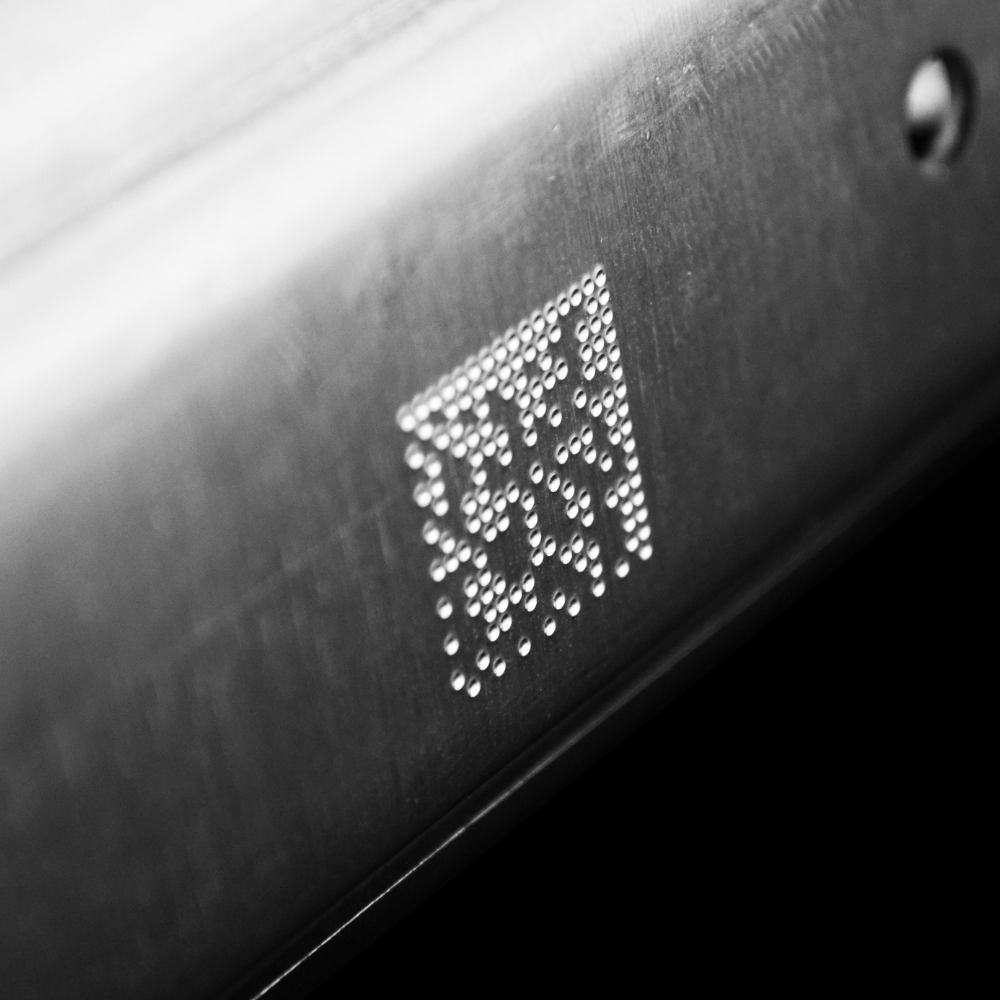
Identification and Traceability Bring Clarity
With the sheer number of components being produced, clear identification and traceability are absolutely essential. They help answer key questions in production: Has an error occurred during the manufacturing process, requiring components to be recalled? How can production lines be digitalized and made more transparent? And are regulatory requirements being met without gaps?
Identification and traceability are therefore fundamental, but practical implementation is just as important. In manufacturing environments, there is often very little space available for part marking. Yet when data still needs to be captured reliably, the second dimension comes into play.
Data Matrix Codes as the Connecting Link
Data Matrix Codes (DMCs) make it possible to store large amounts of information in an extremely small space. They often contain an identifier that allows production, inspection, or maintenance data to be uniquely assigned within connected systems. Thanks to their compact, two-dimensional structure, they are also ideal for components where marking space is limited. The code can be captured quickly, and the required information is available instantly.
Long-Term Traceability Requires Reliable Readability
Components are often exposed to harsh operating environments. One thing remains true: a Data Matrix Code is only as valuable as its readability. To ensure that information remains reliably available throughout the entire lifecycle of a component, the marking itself must be permanent, durable, and resistant to wear. Conventional stickers and labels often reach their limits in such environments. Regardless of environmental influences, code quality (contrast, module size, geometry, etc.) also plays a major role after the marking process, especially when combined with suitable reading systems.
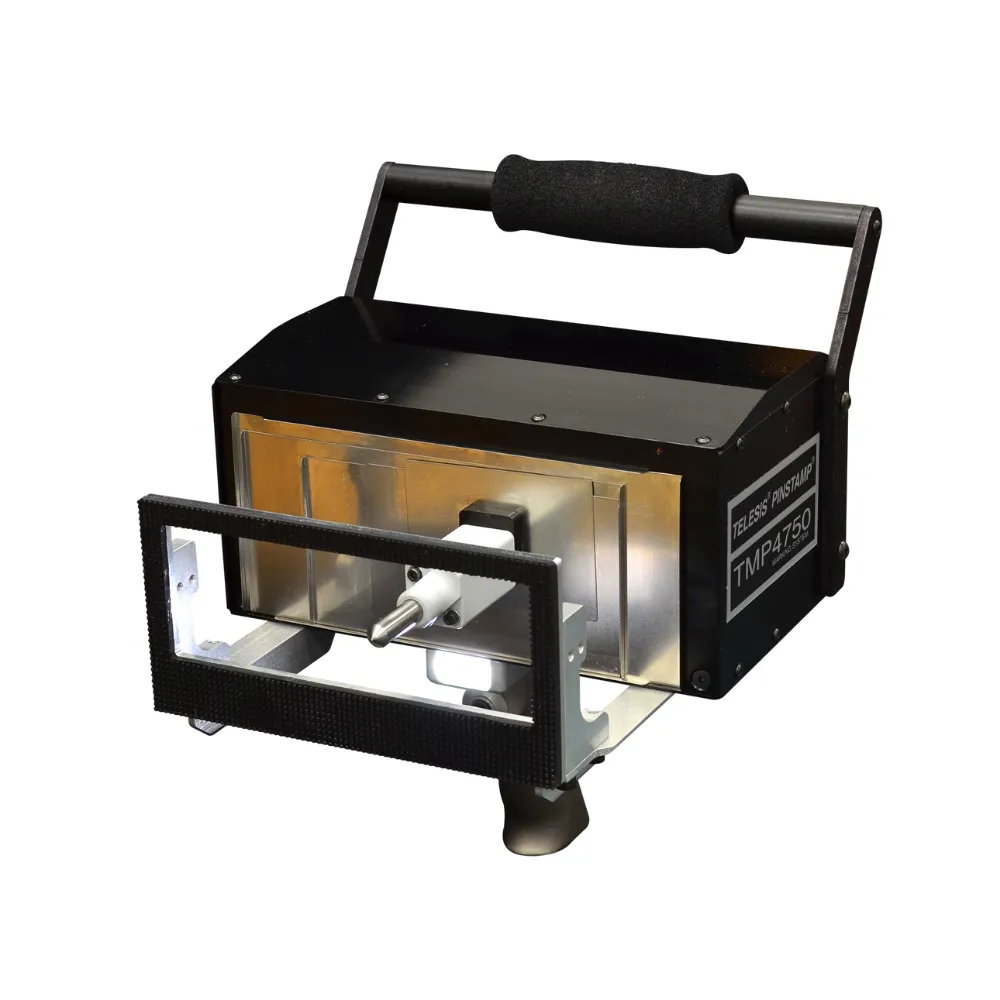


That is why many manufacturers rely on permanent marking methods such as dot peen marking or laser marking. However, choosing the right technology always depends on the specific application. The material, surface characteristics, and operating conditions of the component all play a decisive role. There is no universal solution. That is exactly why it pays to take an individual look at each component and its unique requirements.
Tech Day in Lohmar: We Assess Your Components and Provide Recommendations for Your Data Matrix Codes
On 18 November 2026, we will open our doors in Lohmar and invite you to join us for an interactive journey into the world of industrial part marking and Data Matrix Codes.
Our experts will discuss your requirements with you and demonstrate suitable options for part marking applications.
Feel free to bring along one of your own components from production. We will mark it directly on-site and provide recommendations on the most suitable marking technology for your specific application.
And of course, with an intensive programme running from 10:00 a.m. to 4:00 p.m., refreshments and catering will be provided throughout the day.